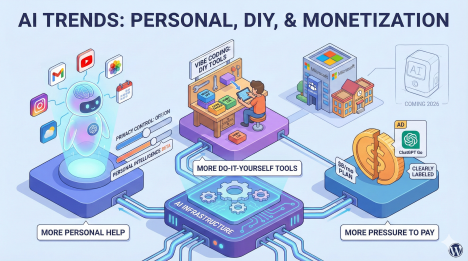
Artificial intelligence is changing fast, and this week’s headlines show it is moving in three big directions: more personal help, more do-it-yourself tools, and more pressure to pay the bills.
First, AI assistants are getting to know you. Google launched a “Personal Intelligence” beta for Gemini that can connect to apps like Gmail, Photos, YouTube and Search to give more tailored answers. The goal is simple: less time explaining yourself and more time getting useful help. But it also raises a new question for everyday users: How much access should an assistant have to your life? Google says the feature is off by default, a sign the company knows people will want control.
Second, AI is turning regular people into “builders.” TechCrunch reported a rise in “micro apps” — small, personal tools made with AI that solve one problem for one person or a small group. Think of a quick app to pick a restaurant, track chores at home, or log a hobby. These apps are not meant to become big businesses. They are meant to be “good enough” and fast. That is exciting, but it can also be risky if the app has bugs or weak security.
Third, AI companies are working harder to make money. OpenAI is rolling out ChatGPT Go globally, including an $8-a-month plan in the U.S. At the same time, OpenAI is testing ads for some Free and Go users in the U.S. The company says ads will be clearly labeled, won’t change answers, and won’t appear for users under 18. For many people, this will feel familiar: free services usually come with ads. Still, seeing ads inside a chat could change how the product feels.
Behind all of this is a bigger shift: AI is leaving the “toy” phase and becoming real infrastructure. Microsoft is pitching a community-first plan for U.S. datacenters, including training programs through schools and libraries. And at Davos, an OpenAI leader said the company is on track for a Jony Ive-led physical AI device in the second half of 2026. That suggests the next wave of AI may not live only on screens.
Key points to remember
- AI assistants are getting more personal — and privacy settings matter.
- “Vibe coding” is helping non-coders build small tools, fast.
- Cheaper plans and ads show AI is entering its “how do we pay for this?” era.